Thursday, January 31, 2019

Beyond Rome...

As much as Rome will offer some pretty unparalleled photo ops, the reality is that there's an entire country beyond Italy's capitol city. While it's naive of me to think I can see everything, I do want to make sure I visit a variety of places and experiences a variety of different things.

After spending two days on a "hop on/hop off" bus, it'll be nice to sit behind the wheel and get on the road. My understanding is that, even though driving through the countryside is not as hectic as it is in Rome, one must still exercise a bit more caution than normal. Apparently, Italians are lunatic drivers.

Thank God for that $11 a day full coverage insurance on the Citroen!

So, much in keeping with my blog entry for what I intend to see in Rome, I'll do the same for those areas outside the borders of the Eternal City.


1. Pescara

My main reason for visiting Pescara is simply because it's on the Adriatic Sea, and I've never been to the Adriatic Sea. It's a little over a two hour drive to the northeast and promises to offer sites that are much different than Rome. It's not really a "tourist town". The old part of Pescara is essentially two short parallel streets of typical Italian houses. Traffic is well regulated into the city, and many of the smaller streets are reserved only for pedestrians.


2. The Amalfi Coast

The Amalfi Coast is a 50-kilometer stretch of coastline along the southern edge of Italy’s Sorrentine Peninsula, in the Campania region. It’s a popular holiday destination, with sheer cliffs and a rugged shoreline dotted with small beaches and pastel-colored fishing villages. It's about a 3-1/2 hour drive from Rome, so I may end up doing an overnight trip when I go. The drive is supposed to be, well, "challenging", but I'm not swayed.


3. Naples/Pompei

Located a bit further south than the Amalfi Coast, Naples is the third largest city in Italy, following Rome (the largest) and Milan in northern Italy. One of the most imposing landmarks in the city is the Castel Nuovo, built in the year 1279. Looking at photos online, I definitely want to photograph this place.


Pompeii was an ancient city not far from Naples. In the year 79 AD it was buried and preserved in ash and pumice after the eruption of nearby Mount Vesuvius. It's now a world heritage site and sees over 2.5 million visitors a year. That's more than 6,800 a day, every day.


4. Florence

The city of Florence lies to the north, about three hours by car. It's known for its architecture, its culture, its art and its monuments. Forbes calls it one of the ten most beautiful cities in the world. Like Rome, there's a lot to photograph, so it's probably going to amount to a really long day trip for me. Then again, I do day trips to Savannah from St. Augustine, and it's roughly the same distance.


5. Terni

Where?

Yup, Terni.

Only about 65 miles from Rome, Terni is a strong industrial hub in Italy and has the nickname "The Steel City". It's also known as "the city of lovers", as Saint Valentine was born and became a bishop there, and his remains are preserved in the Basilica san Valentino located not far from the center of town.

For me, though, the bigger draw lies about five miles outside the city. Created by the ancient Romans, the Cascata delle Marmore (Marmore Falls) are the highest man-made falls in the world. Because it's man-made, the flow of water can be, and is, controlled. The falls normally flow between noon and 1:00pm and again from 4-5pm daily.


The trips outside of Rome are going to make for some long days, even the relatively close destination of Terni because of the side trip to the falls. The undeniable reality is that there's simply just too much in Italy to try to see in the time I'll be there. In all honesty, I don't know if two full weeks would afford me enough time. I would love to get to Milan and Venice but, unfortunately, those just don't seem to be in the cards.

So, the best I can do is the best I can do, and I'm going to make sure that my days in Italy are packed from the time I wake up every morning until the time I pull the blanket over me at night.

The way I see it, that'll make for a good trip...


Monday, January 28, 2019

Things To Do, Places To Go...

With eight full days in Italy, I have both plenty of time and not nearly enough time.

Certainly, if I were going to limit myself to seeing the sites in Rome, eight days would probably be plenty of time. But I just can't go to Italy and stay in one city. There's a lot there to see, so I want to try to see as much as I can.

While in Rome, I plan on playing the "tourist" role to the nth degree. Rome is home to some of the most impressive sites on the planet, from art museums to fountains to sculptures. There is a veritable treasure trove of photo ops, and I plan on doing one of those hop on/hop off buses to get to many of them during my first two days in Italy. 

So, what's on my "Top 10"?


1. Trevi Fountain

Found on the eastern side of the Tiber River, this fountain was completed in 1762 by Giuseppe Pannini. It's the largest Baroque fountain in Rome and one of the most famous fountains in the world. The trick here, as with many other sites in Rome, will be to beat the throngs of people clamoring to see it. I'm not averse to heading over to it in the middle of the night, though, if it means getting more dramatic photos which include fewer people.


 2. The Colosseum

I can't imagine visiting Rome and not visiting the Colosseum. It's also difficult to imagine a more iconic landmark to represent a city; maybe the Eiffel Tower or the Empire State Building. You just can't look at the Colosseum and not know what city it's in. Completed in the year 80 AD, it's the largest amphitheater ever built.


3. Vatican City

Vatican City is actually a sovereign city state which is completely surrounded by the Italian capitol city of Rome. Despite being the smallest country in the world both by area (approximately 109 acres) and population (about 1,000), it's the most important country in the world for some 1.3 billion Roman Catholics. The Vatican Museums are here, as is the Sistine Chapel (where, unfortunately, photography is forbidden). But even having the chance to photograph St. Peter's Square will be the opportunity of a lifetime. Most surprising is that, even though this has been the site of the Holy See for centuries, the Vatican has only existed as a city/state since 1929.


 4. The Forum (Forum Romanum)  

The Forum has stood, in one state of construction or another, since the fifth century BC. It has served witness to elections, trials, parades and gladiator matches. Excavation of the Forum was officially  begun in 1898 by the Italian government and continues to this day.


5. The Pantheon 

The Pantheon was completed by the Emporer Hadrian, although the exact year is unknown. It's suspected that it was dedicated around the year 126 AD. It's one of the most well preserved of all ancient Roman structures, probably due to the fact that this immense building, where the artist Raphael is buried, has been in continuous use since it was built. It's been called the only architecturally perfect building in the world. Visiting the Pantheon used to be free, but Italy's culture ministry has announced they will institute a €2 ($2.29 US) admission fee in May of last year. 


6. Piazza Navona
One of Rome's best known public squares, Piazza Novona  dates back to the 1400's. Nowadays, it's home to artists, street performers and cafes filled with espresso sippers. There are also a number of impressive monuments, including one by Gian Lorenzo Bernini (Fountain of the Four Rivers) and another by Francesco Borromini (Sant'Agnese in Agone). 


7. Trastevere
This neighborhood, located south of Vatican City, is often compared to the Left Bank in Paris or New York City's Greenwich Village. Many travelers comment on how "authentic" an Italian feel this  neighborhood has compared to the bustling tourist lines in other areas of the city. 


8. Santa Maria della Vittoria

My main reason for wanting to visit this church is the fact that it was featured in the Tom Hanks movie "Angels & Demons". While it's a visually stunning example of religious architecture, it also happens to be quite small and it can get very crowded with would-be Robert Langdons. Hopefully,  the fact that I'll be there prior to the peak tourist season (which is summer) will help.


9.Gianicolo Hill (Passeggiata del Gianicolo)
Also known as The Janiculum, this hill lies outside the boundaries of the ancient city. The hill provides unobstructed, panoramic views of the Eternal City. Once at the top you can see buildings such as St. Peter's Basilica and the Altare della Patria.


10. Church of San Luigi dei Francesi 

The exterior of this church, which was completed in 1589, can fool you. It's appearance on the outside belies its dimensions on the inside, and to say it's grandiose would be an understatement. This church is located in Piazza Navona.


11. Santa Maria Della Pace

In 1482, the church was commissioned by Pope Sixtus IV, and it was dedicated to the Virgin Mary to remember a miraculous bleeding of a Madonna image there in 1480. Photographically, it's stunning. I've reviewed literally hundreds of photos of this church and there's no way it can't be on my "must see" list. The nice part is that it's not far from the Piazza Novona.


So, it's easy to see that my first few days in Rome are going to be pretty full. There's a lot to do, a lot to see and a lot to photograph.

I think these eleven sites are going to take two very full days, and I'm looking forward to them.


***Obviously, the photos included here were not taken by me, and I want to be sure that's understood. 
Many thanks to the talented photographers for the amazing photographs I've included here.***
________________________________________________________________________________


Now, as an aside...

Many people have expressed surprise that I'm doing this trip by myself. They're somewhat surprised that I wouldn't want to share this experience with someone else.

Well, truth be told, I would. But that would have to be a very specific person.

First, it would have to be someone with a valid passport. I have to say, I've been pretty surprised by the number of people I know, who I'd consider traveling with, who don't have one. They're easy to get, aren't that expensive, and they literally open the world to you.

Second, it would have to be someone who could pick up and leave for almost two weeks. Unfortunately, not too many people are in a position to do that. I'm fortunate in that I literally write my own schedule. I can come and go as I please and stay as long as I want. Not a lot of people are able to do that.

Third, and this is probably the biggest factor, it would have to be someone who thoroughly enjoys photography. I'm not doing this solely as a vacation. My whole focus during this trip is going to be photography. It'll include both early mornings and late nights. It'll include road trips, high-speed trains and overnight stays. It's going to be a trip full of total planning and flying by the seat of my pants. In short, I'll be expecting the unexpected and charging at it full speed.

So, if you think you can keep up, let me know. This isn't the last trip I'll take...

Thursday, January 24, 2019

Italy - Prep Work...

Well, after talking about an Italy trip since we went to Ireland in August, I finally pulled the trigger. 

In April, I'm going to spend eight full days in Italy. It'll be just me, my Canon 6D MKII and a Citroen C4. I'll be based in Rome, but side trips are definitely going to be on the agenda. I plan on visiting the Amalfi Coast (which looks amazing) and Florence, and I'd also like to do a trip across the country to the Adriatic Sea, just to say I did it. 

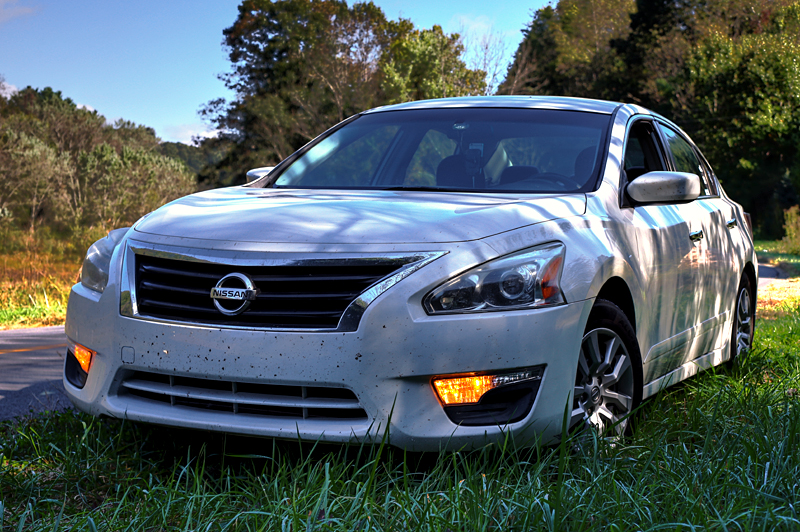
Unlike those maniacs in Ireland, Italians drive on the proper side of the road. Even still, I'm told that traffic in and around Rome can escalate to insane levels, so I rented something small with an automatic transmission. The Citroen C4 will never be accused of being the sportiest ride on the road, but it ain't bad:


It's got a 16 gallon tank and gets roughly 37 miles to the gallon, so a tank of gas is going to get me well over 500 miles. The Amalfi Coast is only 170 miles from Rome, so a tank of gas makes that trip easily. Pescara, which is on the Adriatic Sea, is only 130 miles away; yet another easy trip. Aside from those side trips, I'm going to be staying only a few miles from the Vatican, so when I want to get into the city center I can either take a shuttle from the hotel (for only €3) or drive and deal with parking. It'll be nice to have the car, though, when I want to do some night shooting and the shuttle's not running.

Everyone's been asking where I'm going to be staying. Did I pick some bed & breakfast along the coast of the Mediterranean? A quaint little inn downtown where English is a seventh language? No, it would be neither. See, one thing I've learned after years of traveling is that things can often go sideways and, when they do, those smaller, quaint inns aren't always prepared to deal with problems. So, I'll be staying at Holiday Inn Rome - Eur Parco Dei Medici. Now, I don't know what all of that means, but I do know that it means I'll be staying at a four star property with all of the amenities one would expect from a worldwide brand. 

And, hey, the rooms look pretty nice:


One of the things that's bound to be a challenge is the language barrier. Of course, I suspect that the hotel staff will speak English, as will those working at most of the tourist attractions in and around Rome. But what about when I'm somewhere between Rome and Bergamo, and I have a question about something? The further away you get from the metropolitan areas the less likely English will be widely spoken.

Enter this little guy:


The Multi-Language Portable Smart Voice Translator (couldn't they have come up with a shorter name for it?) lets you translate on the fly. You speak into it and it instantly translates what you say into one of 30 different languages. It boasts an insane accuracy rate and translates whatever you say in as little as .2 seconds. And, what's nice is that whoever you're talking to can speak into it and it will instantly translate that speech into English. The unit was $100, which is more than I think I would normally spend on an impulse buy, but it could prove to be a bargain if it works the way they say it does.
 
And, since this is going to be a full-blown photo trip, I would be remiss if I didn't mention my two favorite apps. 

First (and thankfully), my favorite GPS app, Waze, works in Italy. It's the most accurate GPS app I've found, and it even works better than my dedicated Garmin GPS unit (which hasn't seen the light of day in over a year). It will be indispensable on those day or overnight trips outside of Rome.

Second, RGPS (Really Good Photo Spots) will come in awfully handy when I'm wondering where to go to shoot. Sure, when I'm in Rome there's plenty to photograph and it's all pretty easy to find. But I could be in Florence and not know that there's a great scenic view only a mile down the road and around a bend. RGPS clues me into those things.

So, the games begin. Over the next couple of months I'll be dialing in the things to do and the tours to take. The "hop on/hop off" bus that we did for two days in Dublin was fantastic, and they have something similar in Rome. I can't imagine not doing that, as it really is the best way to move around a city and see the main sites. 

From a photographer's perspective, there's so much to see and photograph in Rome, and the rest of the country, that I'm already wondering if I should've done a longer trip!


Monday, December 3, 2018

Let's Talk Apps...

From time to time, I'll be talking about cell phone apps as I find good ones. Let's face it, it's almost impossible to get through your day without using them. Well, if you travel, there are some very definite apps you should download to help make your photographic life on the great big open road a little easier. So, in no particular order or importance, here ya' go:


R.G.P.S. - R.G.P.S. stands for "Really Good Photo Spots". This is a great app for when you find yourself in unfamiliar surroundings and you're not sure what's around that might make for a nice photo op. It utilizes your phone's GPS function to find sites of interest. You can even add sites in case you find something that's not already in their database (which is pretty damn extensive). The best part? It's totally free. If you like it, you can do what I did and elect to pay $9.99 a year (or less than three cents a day!) to upgrade the app. The upgrade not only kills all of the pop-up ads which are so common with free apps, but it also allows you to save locations for offline access, create trips and do advanced searches. I've been using this app more and more lately and I like it a lot.


Magic Hour - The magic hour, also known as the golden hour, is when your natural light source, the sun, is givin' you the goods in spades. When you want nice, warm colors in your photos, you want to shoot just after sunrise and just before sunset. This app counts down the hours, minutes and seconds to the magic hour, so you'll know if you have time to stop for coffee on your way to shoot the sunrise. This app is also free and can prove to be indispensable.


Accu-Weather - Now, this should probably go without saying, but have a weather app on your phone. I have the Accu-Weather app, but there are a myriad of them out there and there are plenty of them that are free. Make sure you get one which has a predictive radar. After all, there's no sense in packing up your ride with a ton of photo gear and driving an hour only to get to your destination to find that you're being rained out.


Pocket Light Meter - As cameras have improved with regards to their technology, so has the need for "support gear" decreased. For instance, when I was shooting film a light meter was a must-have in the camera bag. For those who wish to meter their shots, this app is excellent. This app allows you to nail the exposure, and allows for you to adjust the shutter speed, your aperture and your ISO. I don't use it that often but, when I do, it's been pretty spot on.


Waze - This is, without question, the best GPS app I've found. Not only does it give you the most time efficient route, it reroutes you on the fly as other Waze users report traffic jams, construction, accidents, etc. Oh, yeah, it also allows users to report the location of police who are out looking for those of us (yeah, I'm guilty from time to time) of pushing the limits of the law with regards to speed.

Of all the GPS apps I've found (and downloaded and then deleted), this one has proven to be the most beneficial and easiest to use. Why? Well, with a traditional GPS unit, I have to enter an address. If I don't have that, though (and I often don't), I'm pretty well screwed. With Waze, though, I can enter something like "Big Talbot Boneyard" and it will instantly provide me the route to Big Talbot Island State Park, complete with a very clear visual depiction of the route. Waze also has voice prompts for which you can change both the voice and the language. I have a British gal calling the shots on mine.

I've named her Lola.


There are, of course, countless apps for the countless things you want to do while you're traveling. What I've included here are the ones that I've been using more and more, and which I think could be beneficial for you. Naturally, I look at almost everything with a photographer's eye, but there's no denying that many of these can help the on-photographer, as well...

Wednesday, October 31, 2018

New Name, New Focus, Same Old Curmudgeony Traveler...

Well, as you can see, the blog has a new name. I liked "The Beaten Path", but the reality is that it didn't quite fit the direction that I want the blog to take.

About 15 years ago, I started traveling pretty extensively. I was what the TSA refers to as an "experienced flyer". I learned a lot of tricks; what to do, what not to do, and how to make your trip, be it in the sky or on the ground, go smoothly.

Much of my travel was business related. Being the Canadian Regional Sales Manager for Taylor Guitars meant that I was flying half a dozen times a month and then, once I got there, I was driving pretty extensively. I was staying in hotels. I was dining out. I was renting cars and paying for gas, all on an expense account. That meant I had to keep pretty meticulous records regarding what I spend and what I did.

I'm still traveling, but it's primarily for leisure nowadays. The occasional photo job might require some travel but, for the most part, I'm traveling for fun and I'm loving it.

So, the point of this blog will slowly, but ever so surely, shift to one of sharing travel tips, destinations, do's and don'ts, etc. "The Beaten Path", I often said, was little more than a self-indulgent ego stroke. "Great Big Open Road" aims to be more than that.

If you'd like, you can follow me on Instagram and Twitter. I'll also, eventually, get a Facebook page set up, as well.


If you find this page helpful, let me know! If you have travel suggestions you'd like to share, send them along and I'll get them posted and properly attribute the tips!

So, let's see if this little endeavor pans out!


Saturday, October 13, 2018

The Blue Ridge Mountains...

It's no secret I love to drive. Given enough time, I would rather drive anywhere than take a plane. There's just something about being on the road which breathes a little extra life into these aging veins of mine.

Now, I've driven cross country three times. I've driven from San Diego to Portland, Florida to New York and countless shorter trips in between. I just dig the road. And, if I'm lucky enough to be on the road with my camera, all the better.

Such was the case recently when I hit the Blue Ridge Mountains. I was staying with friends in Moneta, Virginia, which is really only a stone's throw away from the Blue Ridge Parkway.


The entrance to one of the 25 major junctions along the parkway...

The Blue Ridge Parkway stretches for 469 miles, from Rockfish Gap, Virginia on the northern end and Swain County, North Carolina on the southern end. The entire parkway has a speed limit of 45 mph but, trust me, you don't really want to go any faster than that. First, it's dangerous, especially at night. There are no street lamps, but there is plenty of wildlife. The last thing you want to do is hit a bear at 65 mph at three in the morning.

More importantly, though, you don't want to miss all there is to see. The Blue Ridge Parkway is, quite simply, one of the most beautiful thoroughfares in the entire country, if not the world. Take your time and see it. Don't be afraid to pull off and kill an hour or two.

A quiet stretch of asphalt along the Blue Ridge Parkway...

There is no shortage of amazing photo ops along the parkway. One, Mabry Mill, is touted as being the most photographed site on the parkway. Over a quarter of a million people visit the site every year.


Mabry Mill, at milepost 176.2 in Floyd Country, Virginia, is visited by hundreds of thousands of people annually, and is one of the most photographed sites along the entire parkway...

There's also an excellent restaurant at Mabry Mill. Just be careful when you order. "Give me a good ol' southern breakfast" clearly means different things to different people!


And this was before the four thick slices of toast arrived...


If you're like me, you love finding old, dilapidated barns and buildings to photograph. There are plenty to be found...

There are often many dead bugs along the Blue Ridge Parkway, as well. You rarely have to go far to find them...

I'm not entirely sure what this is, but it sure was colorful...

I believe this qualifies as an actual "babbling brook"...

One of the rustic displays at Mabry Mill...

The lookout tower at Groundhog Hill at mile post 188.8. At 3,030 feet above sea level, you get a stunning 360° view...

Another rustic display at Mabry Mill...

Remember the old "Andy Griffith Show"? It was set in the fictional town of Mayberry, North Carolina. Well, my friends, Mayberry isn't entirely fictional. No, not at all. Mayberry, Virginia (they actually lost the "RFD" designation in 1922) lies along the parkway near the town of Meadows of Dan. The general store there boasts everything you might expect to find in a general store, including photos and autographs of some of the television show's cast.

Interestingly, though, the television show never found its way to Mayberry, Virginia. In the television show, Mayberry is loosely based on the town of Mt. Airy, North Carolina.


Some interior and exterior views of the Mayberry General Store, established in 1892...

Of course, there's simply no way to express just how truly beautiful the Blue Ridge Parkway is. You simply need to experience it for yourself. And while, at less than 500 miles, it's certainly possible to drive the entire length in a day, I'd recommend breaking it up over a long weekend so you can truly take in and appreciate everything you'll see along the way. The short amount of time I spent on the Blue Ridge Parkway has earned a full-length run a spot that's rather high on my bucket list.


So, if you're so inclined, grab your camera and an overnight bag and venture off onto one of the most pristine roadways to be found anywhere.

You can thank me later...


Monday, September 24, 2018

Ireland - The Final Day...

Maybe it was destined to be this way, but our final day in Ireland was, by a wide margin, the best day of our entire vacation. We decided to take a tour to Malahide Castle (or Caisleán Mhullach Íde in Irish)  and the fishing village of Howth.

Malahide Castle dates back to the year 1185, and it was inhabited by one family, the Talbots,  through 1976. The only exception was the 11 year period from 1649-1660, when Oliver Cromwell granted it to Miles Corbett after the Cromwellian conquest of Ireland. Corbet was hanged after the death of Cromwell and the castle was restored to the Talbots.

From the outside, it's very much what you would expect a castle to look like. The towers, however, weren't added until 1765.

Malahide Castle...


Malahide Castle even has (had?) its own abbey. It stands in ruins today, but at one time served as the family church, and the abbey grounds contain the Talbot family tomb.

Malahide Abbey...

Malahide Abbey...

Once inside the castle, you begin to sense just how old the structure is. While it's clear there have been modern improvements (lights, alarms, etc), it's still unmistakably ancient.

The only way to tour the castle was with a guide, and that was just fine with us. We would've been left wondering what this room was or where that corridor led. And, while many of the rooms were extraordinarily grand in scale, many were quite conservative in their size.


The Great Hall. A jester would perform on the balcony along the back wall...

A view through a bedroom window onto the castle grounds...

The formal sitting room...

The library...

One of the five bedrooms in the castle...

Looking out onto the castle grounds from the Oak Room...

The castle remained under the ownership of the Talbot's until 1976 when Rose Talbot, after inheriting the castle and the estate from her brother, the 7th Baron Talbot, sold the castle to the Irish state, primarily to fund the payment of inheritance taxes. 

The tour through the castle, which is reportedly quite haunted, is well worth the time and money. Don't forget to visit the walled garden and the butterfly house while you're there, too.

After Malahide Castle, we were off to the fishing village of Howth.

Welcome to Howth...

The village of Howth is less than 10 miles from the bustling downtown streets of Dublin, but it's a world away in terms of what it is. Howth is a quaint village lined with restaurants, small shops and even an Irish Coast Guard Station (oddly enough, I didn't see any Coast Guard boats). Fishing boats of all shape and size line the quay, some unloading their catch while others were preparing to leave, or on their way out of, the harbor. U2 drummer Larry Mullen also lives in Howth.

And the winner for shortest driveway on the planet goes to...

You haven't truly had fish & chips until you've had fish & chips in a quaint Irish fishing village...

Some of the fishing boats in Howth...

Some of the fishing boats in Howth...

Some of the fishing boats in Howth...

Some more of the fishing boats in Howth...

A small tour boat exiting the harbor...


The Howth Coast Guard Station...

And that's how you say it in Irish...

No Coast Guard boats were to be found, but they had Coast Guard Toyotas...

The tour company offered a walking tour of Howth, and we were surprised to learn that we were the only three people who signed up for it. Our guide, Conor Heggarty, was kind enough to make  accommodations and tailor his tour around  the fact that Mom's not as mobile as she used to be.


Our guide, Conor Heggarty. I'm pretty sure there's nothing about Howth, and probably Ireland, that he doesn't know...


Howth Castle, from a distance...

Howth Castle...
 
My brother Greg at Howth Castle...

Following Howth Castle, Conor wanted us to get a nice "bird's eye" view of Howth. Well, you can't get such a view from sea level. Mom decided to sit this one out, because Conor would soon be leading us on climb (well, okay, an inclined walk) up a mountain to some cliffs which overlooked the village.

During the climb, we came upon a rock formation known as Aideen's Grave. Aideen’s Grave is a portal tomb. Aideen was said to be the wife of Oscar, who died at the battle of Gabhra around the year 285.  When Aideen learned of Oscar’s death, she collapsed and died of her grief.   Oisin, who was Oscar’s father, had her buried at Howth and had the portal tomb built in her memory.  These types of burials were normally reserved for great warriors or kings.

Aideen's Grave in Deer Park...
 
The tomb is partially collapsed, with the capstone fallen backwards, but the portal stones still stand and you can see what it would have been like.

About halfway through the climb my knees started screaming, and I thought about bailing. But I stuck it out and I'm glad I did. The view from atop the cliffs was amazing.


The views overlooking Howth...

Of course, what goes up must come down, so after spending about a half hour atop the cliffs, we started our trek back down. Walking down is only marginally easier than the climb up, but it went without incident and my knees certainly appreciated it.


A portion of the trail heading down the mountain...


Following the cliffs, we headed out to0 other, less lofty, sights. Our first stop was St. Mary's Abbey in Howth. The original structure was built in the year 1042, but the church was rebuilt or modified through the late 16th century.

St. Mary's Abbey, overlooking Howth...

There are some graves from "recent" burials (within, say, the last 50-100 years), but certainly there are some ancient graves, as well. One of the more notable is that of Thomas St. Lawrence, the 13th Baron Howth. At his internment in 1727, he was eulogized:

 "Behold this stone whose vault contains 

More precious dust than India's veins

For honour's sake then shed a tear

Since honour's self lies buried here"


It's easy to see that ol' Tom was held in somewhat high regard.

For the photographer in me, St. Mary's Abbey offered up a target rich environment. I think my blood starts flowing a little faster any time I come across a place like St. Mary's.


St. Maryt's Abbey, Howth, ireland...

This final day, as I mentioned earlier, was by far the high point of our entire week long trip to the Emerald Isle. Not only did we see an incredibly varied selection of sites, we also were given an amazing history lesson by our guide in Howth, Conor Heggarty. He was an absolute joy to have as our guide and is a sure feather in the cap of Shane's Howth  Hikes, the company he represents. Even though we needed to massage the walking tour a bit, he made sure it was done both comfortably and professionally, and we were in his debt. My next trip to Ireland (and there will be a be a next trip) will include me buying him a Guinness.

________________________________________________________________________________


You know, living in St. Augustine, Florida comes with its own sense of history. It is, after all, the oldest city in the United States. But when you come to a place like Ireland, you start to realize how, even after 453 years, St. Augustine is a relative child in the arena of historical cities. Walking the streets of Ireland and visiting its ancient ruins shines a brand new light on things when it comes to history.

And, when you think about it, there are a lot of places which do just that.

Maybe it's time to start checkin' those out...

The Final Hours...

The final hours in Seattle were fun, low voltage and relaxing. Jess and I have learned not to plan minute by minute and having everything la...